
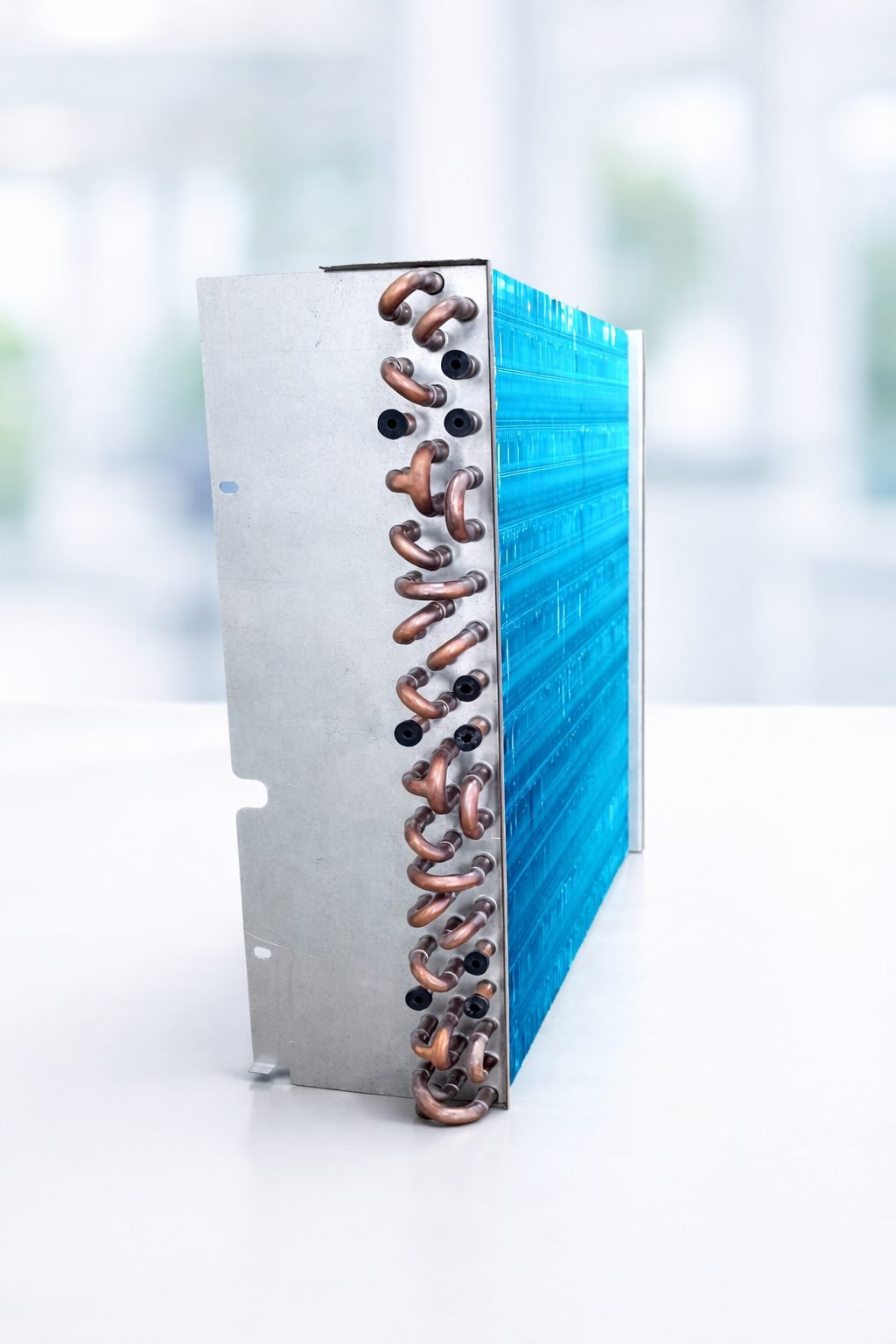
Buying a cooling coil isn't just picking a size. Get the specification right and the coil performs for years; get it wrong and you're chasing efficiency losses forever.
This guide covers what actually matters.
Start with the duty
Capacity depends on entering-air conditions, airflow and the cooling you need. Share these with the manufacturer rather than guessing a size — the coil should be engineered to your duty.
Rows, fins and face area
Rows and fin spacing trade capacity against airflow resistance. More rows and tighter fins mean more capacity but higher pressure drop. A good manufacturer balances these for your system. Read more on rows and fin spacing.
Materials and environment
Standard aluminium-fin coils suit most jobs; corrosive or coastal sites call for copper or coated coils. Specify the casing material too.
Testing and lead time
Insist that every coil is pressure- and leak-tested. Confirm lead time up front. AGH pressure-tests every coil at 35 bar — see our quality standards.
Key takeaways
- Specify by duty, not by guesswork
- Balance rows and fin spacing for your system
- Match materials to the environment
- Demand pressure testing and a clear lead time
Explore Cooling Coils
Get a precision quote from our Delhi NCR team within 24 hours.