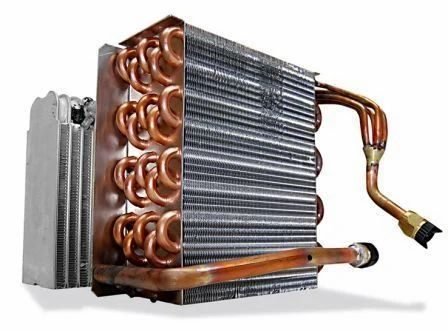
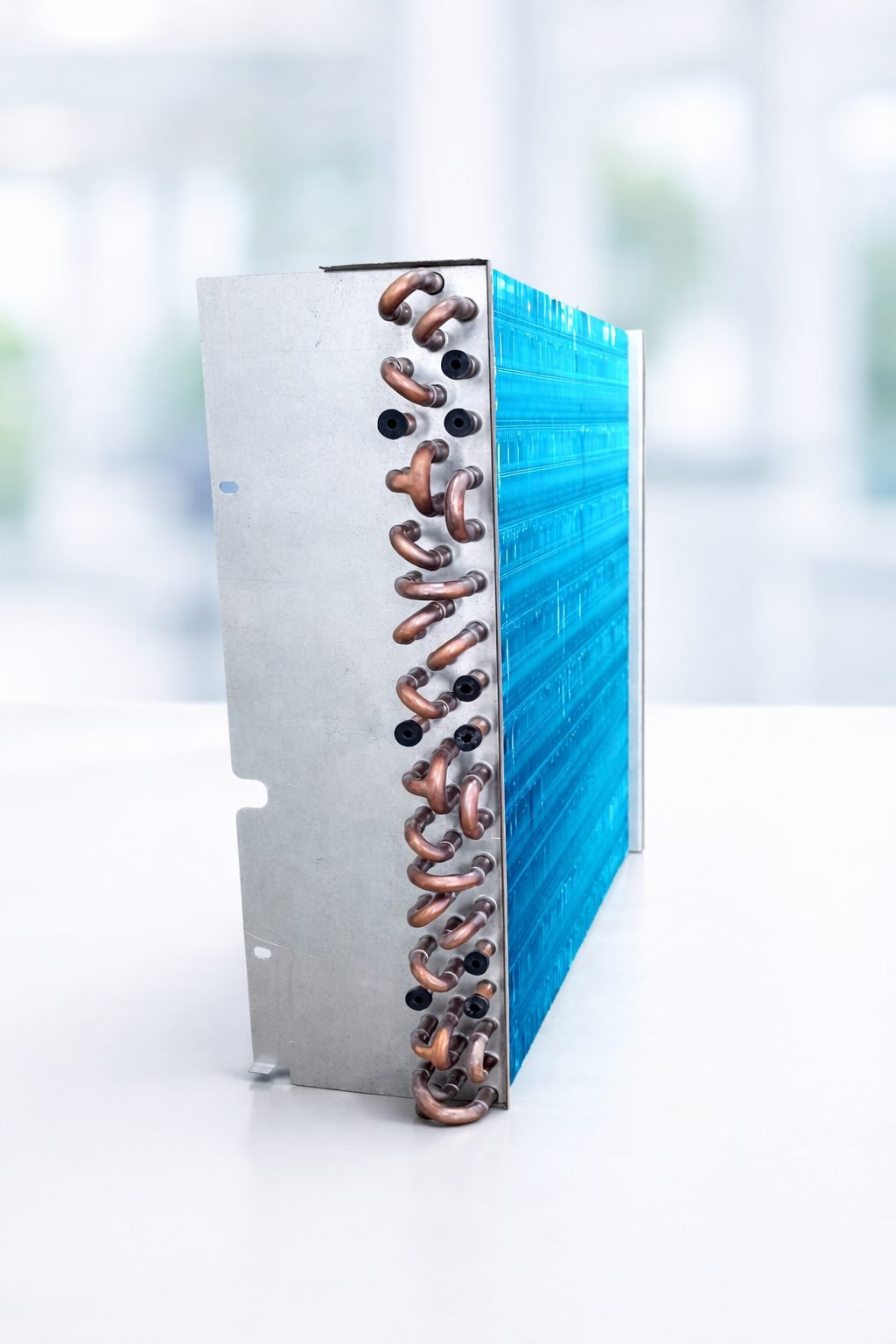
Rows and fins per inch (FPI) are two of the most important numbers on a coil spec — and the most misunderstood.
Getting them right is the difference between a coil that performs and one that fights your fan.
What rows do
More rows mean more heat-transfer surface in the airflow direction, so more capacity — but also more airflow resistance. Cooling coils typically run 1 to 8 rows depending on duty.
What fin spacing does
Tighter fin spacing (higher FPI) packs in more surface area and capacity, but increases pressure drop and can trap dirt. Wider spacing suits dusty or frosting duty.
Balancing capacity and airflow
The art is matching rows and FPI to your available fan static and face area. Too aggressive and you starve airflow; too conservative and you lose capacity. This is where build-to-duty engineering pays off.
Frost and cleaning duty
For cold-storage evaporators, wider fin spacing tolerates frost. For clean comfort cooling, tighter fins maximise capacity.
Key takeaways
- More rows = more capacity + more resistance
- Higher FPI = more capacity + more pressure drop
- Balance against available fan static
- Wide fins for frost and dirty air
Spec a Cooling Coil
Get a precision quote from our Delhi NCR team within 24 hours.