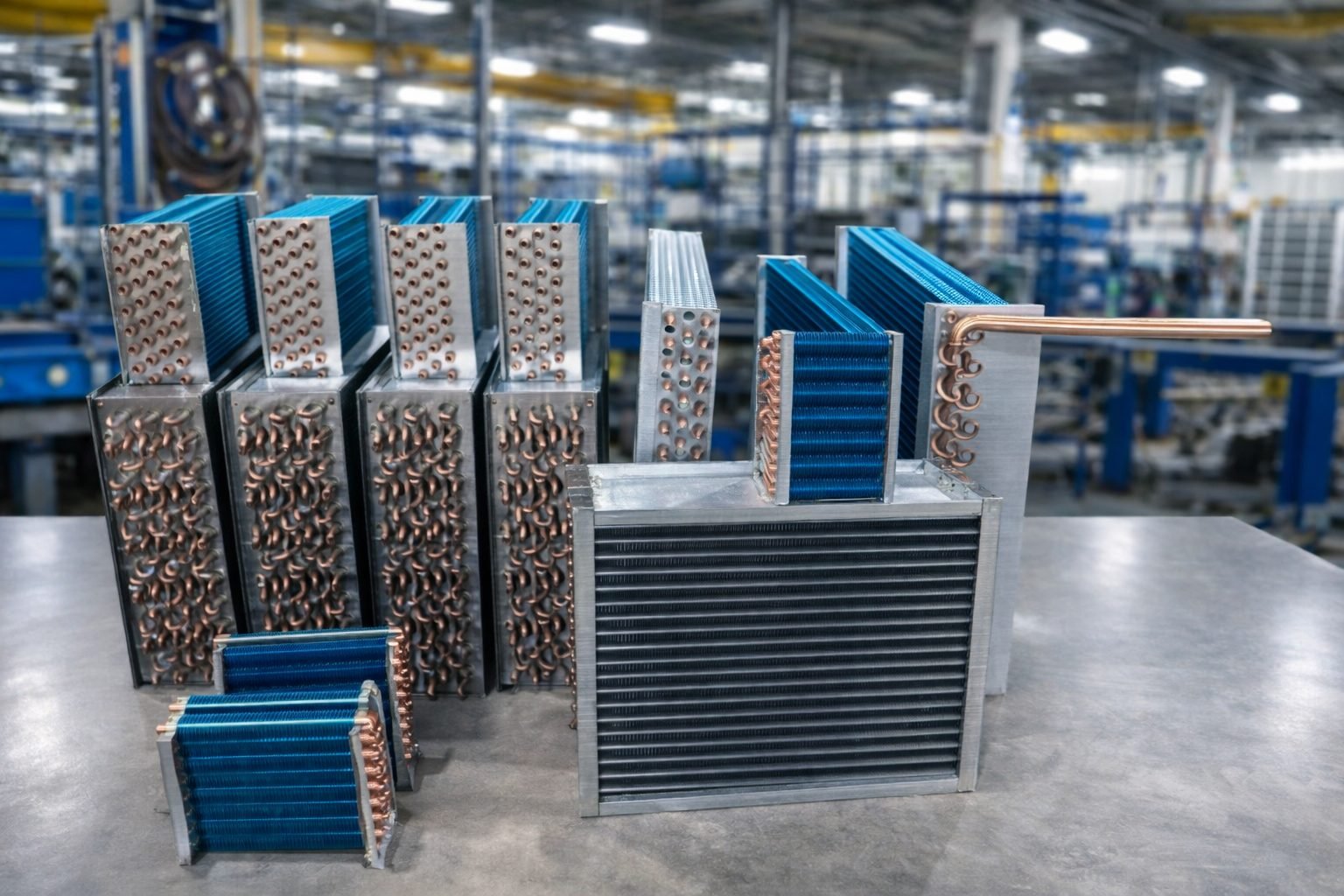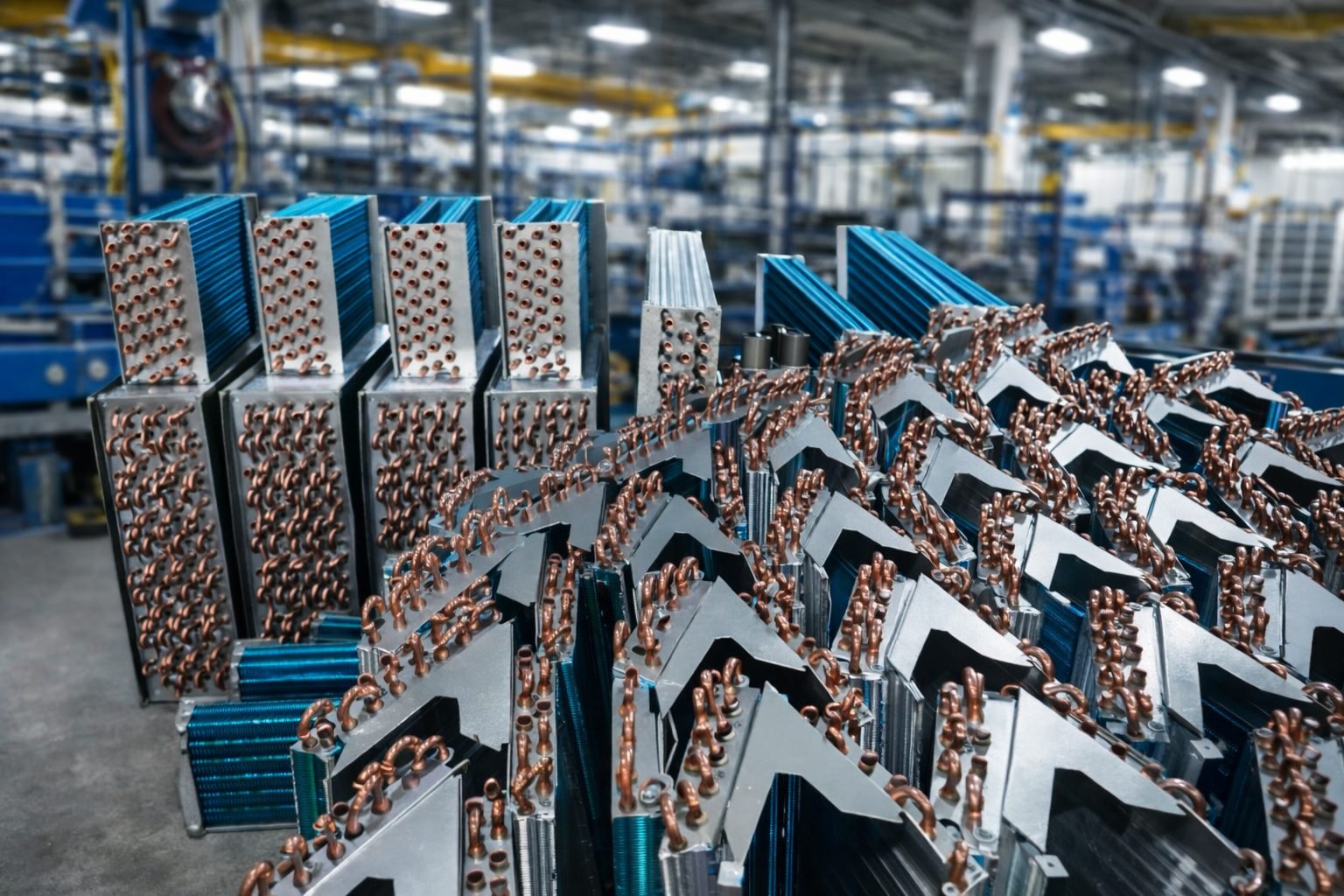
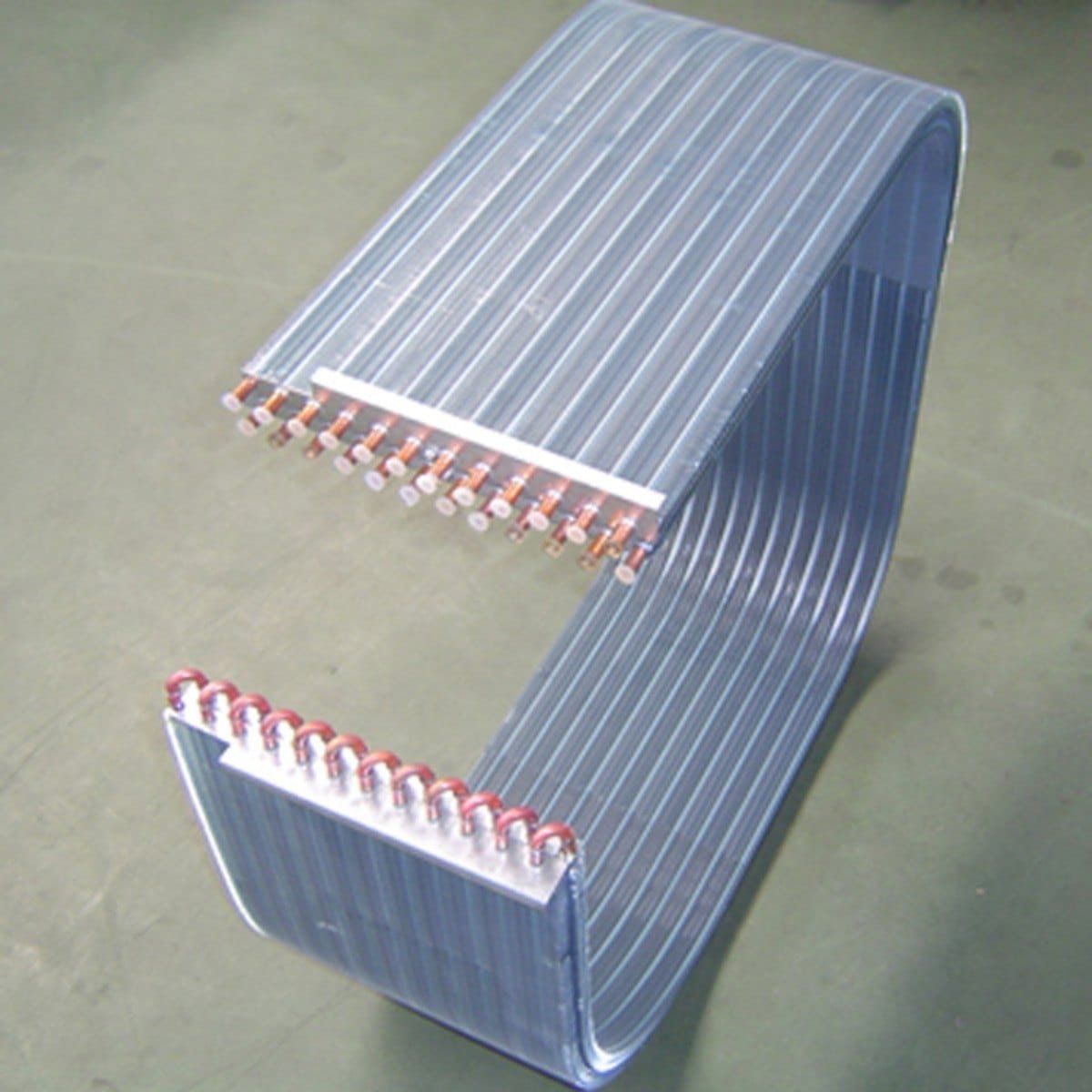
A copper coil's performance is decided long before it's installed — on the factory floor. Every step, from raw tube to final test, either builds heat-transfer capability or quietly undermines it.
Here's how a quality copper coil is actually made.
1. Certified raw material
It starts with certified 99.9% pure copper tube and fin stock. Purity matters: impurities reduce thermal conductivity and invite corrosion. Reputable manufacturers document their material.
2. Fin forming and tube prep
Fins are precision-punched on a forming press to create maximum surface area with consistent spacing. Tubes are cut, cleaned and formed. Consistency here means predictable performance.
3. Tube expansion — the critical step
Tubes are mechanically expanded into the fin pack, pressing metal against metal to eliminate air gaps. This permanent thermal bond is the single biggest driver of a coil's heat transfer. Learn more about why tube expansion matters.
4. Brazing, then testing
Return bends and headers are brazed with silver or phos-copper alloys for clean, leak-proof joints. Then every coil is leak-tested and pressure-tested — at AGH, to 35 bar — before it can ship.
That testing discipline is what separates a reliable coil from a gamble. See our full 10-stage manufacturing process.
Key takeaways
- Purity of copper sets the performance ceiling
- Tube expansion creates the thermal bond that matters most
- Brazing must be clean and leak-proof
- Pressure testing every coil is non-negotiable
Explore Copper Coils
Get a precision quote from our Delhi NCR team within 24 hours.